
Welcome to the NASA Tournament Lab

NASA, Harvard Business School, and TopCoder have established the NASA Tournament Lab (NTL), which will enable the TopCoder community to compete amongst each other to create the most innovative, most efficient, and most optimized solutions for specific, real-world challenges being faced by NASA researchers.

LATEST NEWS

Apr
16

Visit the NASA PDS Contest Series Homepage!

The NASA PDS Contest series has its own homepage and be found by clicking here, or visiting http://community.topcoder.com/pds-challenge/.  See you there!

Apr
11

$3,000 Idea Contest for Kids 13-18 on NoNameSite.com!

The NASA Tournament Lab (NTL) is running a $3,000 Idea Generation Contest on NoNameSite.com!  They are calling for ideas for mobile and/or web apps that can utilize all their Planetary Data System (PDS).

Check it out here.

Mar
27

Zero Robotics Autonomous Space Capture Challenge

The Zero Robotics Autonomous Space Capture Challenge, sponsored by DARPA and NASA, and run by the MIT Space Systems Laboratory, TopCoder, and Aurora Flight Sciences, is a programming tournament that opens the SPHERES satellite research platform to the general public for the first time. The goal of the tournament will be to develop an algorithm related to the recently announced DARPA Phoenix demonstration. The objective of this specific challenge is to write a computer program to control a satellite (called a “Tender”) to enable it to dock with a space object (or POD) that may be tumbling through space. The best algorithm submissions from simulation competitions will be tested in zero gravity on real SPHERES satellites aboard the International Space Station (ISS).

Learn more here.

Nov
30

The $50,000 USPTO Algorithm Challenge has begun!

Are you ready for another fun, exciting NTL challenge?! Announcing the $50,000 USPTO Algorithm Challenge!

The US Patent and Trademark Office, together with the NASA Tournament Lab (NTL), have launched a contest to develop new algorithms to aid in patent examination.

The USPTO is inviting software developers, academics, and the TopCoder community to develop specialized algorithms to help bring the seven million patents presently in the patent archive into the digital age. The contest will require advanced knowledge of text recognition, image analysis, and the construction of bounding boxes.

This experimental contest has a prize purse of $50,000 with $10,000 going to the first place team! Plus everyone’s favorite, t-shirts!

Registration is open now until December 5, 2011 and the contest starts on December 16, 2011. Register for the competition now and read all about the details here.

Best of luck to you!

NASA, through the Harvard-NASA Tournament Laboratory, is supporting an online challenge for artists to design a T-shirt commemorating the final space shuttle mission and the program’s contributions to exploration.

The challenge is run by Threadless, an online design site, and the Harvard-NASA Tournament Laboratory. The lab is administered by Harvard University, which is under contract to NASA to study crowd sourced innovation that leads to tournaments for scientific and engineering challenges.

Read more here.

The Lab is testing hypotheses and analyzing empirical data from real-world competitions to refine the science of how to successfully design and implement prizes and challenges. The rich lessons learned will be invaluable as prizes and challenges become a routine problem-solving tool for NASA and other public-sector entities.

Read full article.

Jul
13

TopCoder caught up with the PDS Idea Challenge Winner, elenashutova recently to hear more about her and her winning submission.  Here is what she had to say:

I’m Elena Shutova and I live in Kiev, Ukraine. My father is a teacher at the Kiev National University in thePhysics Department. This is why there are many books by physics and mathematics in our house. I think most of the space in my parents’ house is taken up by books. I knew that my life will be related to mathematics or physics sciences since high school. I entered specialized physics and mathematics school when I was 14 years old. I graduated from Kiev University Computer Science Department after. I love mathematics, physics, astronomy, and computers equally. But except science I have many different hobbies, and one of my favorite hobbies is dance. I think life is so interesting, amazing, and wonderful that there are no limits for fantasy and dreams about the future, about new worlds in the Universe, about unbelievable scientific discoveries. I encourage all people to be active, creative and, don’t be afraid to generate new ideas and try to look even further than horizon.

The main idea of my “White Spots Detection” proposal is to create a system that generalizes and estimates what areas, parameters, objects of planetary systems are well researched and what objects are “white spots” in terms of knowledge PDS has on it. To implement this idea I proposed to develop a PDS documents parser, processor and validation tool to minimize manual work to collect required information. The parser, processor and validation tool create original database for the whole application. The parser goes through all the PDS files and finds all references of each object that can be queried. Every object is described by set of parameters and criteria which also be part of user query. Files with the object name instances and its parameters are selected for processing. Processor does some inelegant processing of gathered files to get values by each requested parameter of the object. The task of documents parsing and processing is not an easy task as soon as data can be represented in many different ways: text, tables, schemas, maps, calibrated data. This is why there is an additional module such as validation tool. The professionals are able to see collected data, fix if necessary or add info. After these three steps data is transferred into database. The system queries this database to return data on base of the queries user can make in the system UI.

Jul
12

Marathon 2 CraterDetection is Complete: nhzp339 wins!

Congratulations to nhzp339 for winning first place in the 2nd NTL Marathon Match. He will take home the $5,000 top prize! See the full list of winners here.  Stay tuned for more NTL competitions!

Jul
12

NASA Tournament Lab Completes Another Challenge

The NASA Tournament Lab (NTL), at Harvard University’s Institute for Quantitative Social Science, announced this week the winners of its most recent challenge involving the automated detection of impact craters in orbital images. The NTL, in partnership with TopCoder Inc., has been busy ramping up the team, infrastructure and the challenge pipeline to tackle software-related challenges from the space agency.

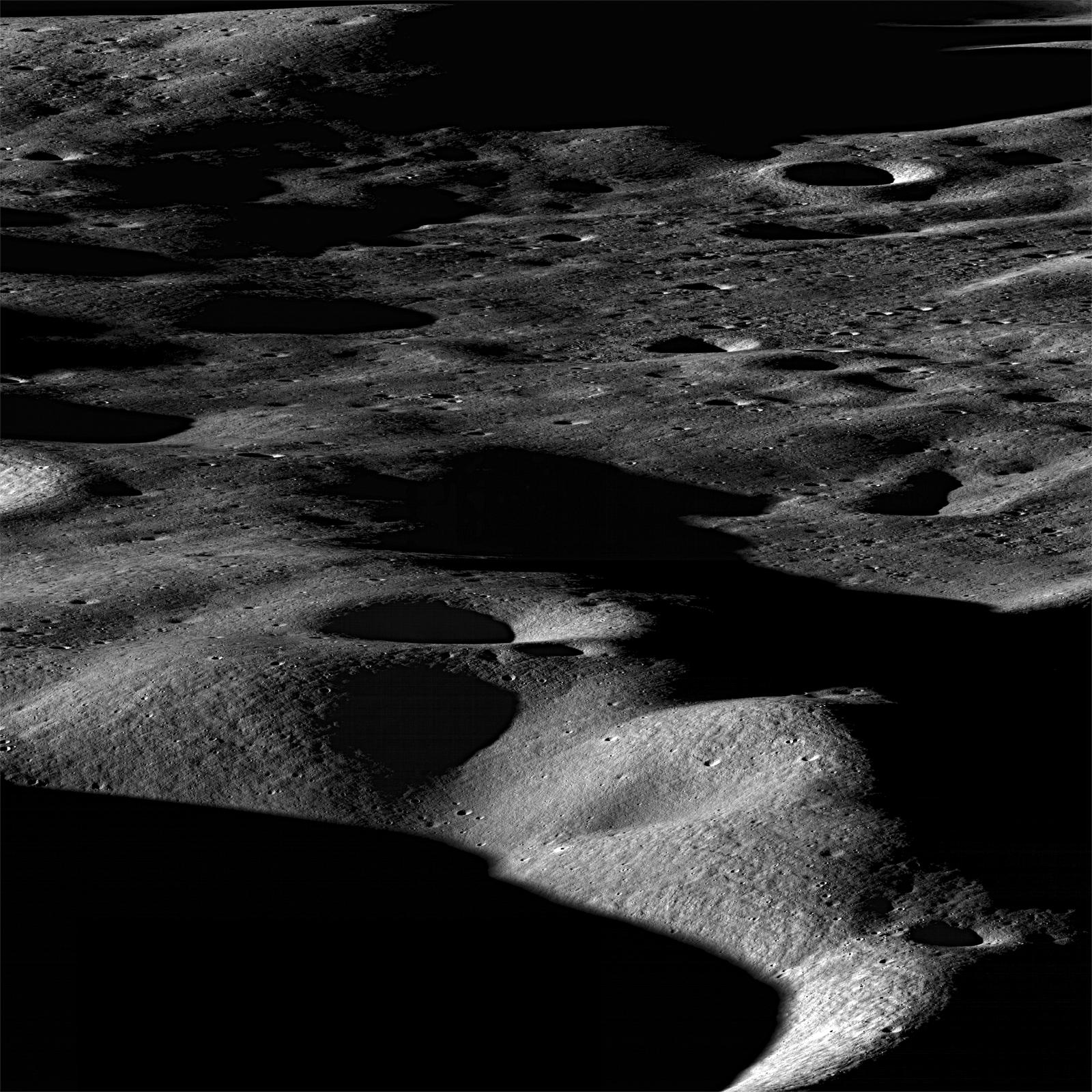
This latest tournament was a two week long contest to create software that automatically detects important features from orbital images. Detecting these features is of keen interest to mission planers and scientists at NASA. Large-scale, automatic and robust crater detection algorithms can help solve one of the most challenging and important data mining problems in space exploration. As the most common topographical feature, craters provide important information on planet formation and geology. Craters also inform the selection of landing sites, as well as provide valuable data for path planning and rover navigation. In addition, craters help scientists align a variety of disparate data sets (radar, laser altimetry, etc.) to each other.

A unique aspect of this challenge was that the dataset used by the TopCoder developers to create their algorithms was actually generated through a Citizen Science initiative at the Zooniverse project. Thousands of individuals, working through the MoonZoo project manually labeled craters from orbital images. These labeled images then served as an important input for both creating and testing the software programs developed by TopCoder members.

As the team continues to build momentum we plan to increase the number and type of challenges released on the NTL. All of this to support the dual goals on the NTL of creating high quality software solutions while furthering the understanding of running challenges for operational needs at NASA.

We want to thank the NTL community and the challenge owners in creating the success we have seen and for their continued support as we build upon the short but successful history we already have.

Jason C. Crusan
Chief Technologist for Space Operations
Space Operations Mission Directorate
NASA

Jun
16

The Second NTL Marathon Match Challenge

The Second NTL Marathon Match Challenge

The second NASA Tournament Lab marathon match challenge focuses on detecting impact craters in orbital images. Detecting these features is of keen interest to mission planers and scientists at NASA.  Large-scale, automatic and robust crater detection algorithms can help solve one of the most challenging and important data mining problems in space exploration.

As the most common topographical feature, craters provide important information on planet formation and geology.  Craters also inform the selection of landing sites, as well as provide valuable data for path planning and rover navigation.  In addition, craters help scientists align a variety of disparate data sets (radar, laser altimetry, etc.) to each other.

The data for this challenge consists of orbital images captured by the Apollo 15-17 and Lunar Reconnaissance Orbiter missions. Craters were manually identified by NASA planetary scientists and by volunteers from around the world as part of the “Moon Zoo” project (http://moonzoo.org). The manually labeled craters provide both training data and a way to measure the performance of the challenge submissions.

“Moon Zoo” is a Zooniverse project, which has over 430,000 registered users helping on a wide variety of Citizen Science projects. The data provided by Moon Zoo for this challenge represents a small sample of a much larger crater catalog currently being compiled. The first full crater catalog from Moon Zoo should be available in late 2011.

Overall, this challenge will help NASA to better, and more effectively, process the ever increasing amounts of orbital imagery of the Moon, Mars and other planetary bodies. This will enable us to better explore and understand our Solar System and beyond.

Note:  This was posted by Terry Fong who is the Director of the Intelligent Robotics Group at NASA.